 White Tank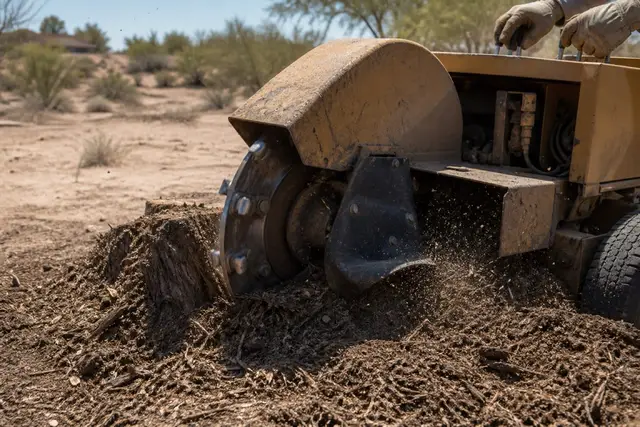
White Tank Clearing Pros puts Buckeye property owners on the phone with a local land clearing contractor when the job is stump grinding — in Buckeye proper and the desert communities around it.
A stump in this desert is rarely done being a tree. Mesquite regrows from the crown with real determination, palo verde tries, and even the aleppo pines and eucalyptus that Buckeye's older neighborhoods planted decades ago leave rot-prone hulks that host termites within reach of your slab. Grinding solves all three problems in one visit: the toothed wheel mills the stump to chips, top of the cut to well below grade, taking the resprout zone and the termite hotel out together.
Depth is the detail that separates real grinding from a cosmetic shave. Taking a stump an inch below the surface looks finished and isn't — mesquite buds survive deeper than that, and anything you plant over shallow grindings sits in a nitrogen-poor pocket. The working standard here is grinding eight to twelve inches down for lawn and planting areas, deeper where a footing, wall, or driveway will cross the spot.
Desert soil adds its quirks. Sandy loam grinds easily, but stumps socketed against shallow caliche will spark the teeth against rock-hard carbonate, and old flood-irrigated ground in the Buckeye Valley sometimes hides a second surprise — roots that chased canal water thirty feet sideways. An experienced operator reads the cut as it happens and follows the runners that matter rather than billing an afternoon chasing ones that don't.
What's left behind is your call: chips mounded in the hole to settle naturally, chips raked off and the cavity backfilled with compacted native soil for immediate replanting or paving, or the whole area finished flush for seed. Access is rarely an issue — modern grinders fit through a standard gate and put less pressure on ground than a loaded wheelbarrow.
Why mesquite stumps deserve special respect
Cut a mature velvet mesquite and walk away, and within one growing season the stump pushes a crown of shoots that grow faster than the original tree ever did — the root system that fed a twenty-foot canopy is suddenly feeding ankle-height sprouts. That root mass reaches deep and wide; mesquite is famous for chasing moisture through soil layers most trees can't penetrate, including fractured hardpan of the kind the UA Extension caliche guide documents under much of the old Buckeye Valley.
Grinding wins because it doesn't argue with the roots — it removes the only part that can regenerate. Once the crown and upper root flare are chips, the remaining roots die in place, decompose over a few seasons, and quietly improve the soil as they go. No herbicide drench, no yearly shoot-pulling, no second removal bill. For a row of cleared thicket, grinding every crown is what makes the clearing permanent; the Cooperative Extension's horticulture references are blunt that mechanical crown removal is the reliable endgame for resprouters.
The hole, the chips, and what happens after
A ground stump leaves two byproducts and both need a plan. The chips — often several times the stump's visible volume — make decent informal mulch for desert beds but shouldn't be piled against structures or left where fine material can blow; on parcels under Maricopa County's dust rules, the finished surface still has to stay put, and the county air-quality department treats any loose disturbed surface the same way. The cavity, if it's getting backfilled, wants native soil compacted in lifts; loose fill settles into a dish with the first serious storm the Phoenix forecast office sends over the White Tanks.
Replanting over a ground stump works with modest patience. Decomposing chips borrow nitrogen from the soil as they break down, so either rake them out and backfill clean, or give the spot a season and a little fertilizer before expecting turf or a new tree to thrive there. For a paver pad or footing, full chip removal and engineered compaction is the standard — say so up front and the bid prices it that way.