 White Tank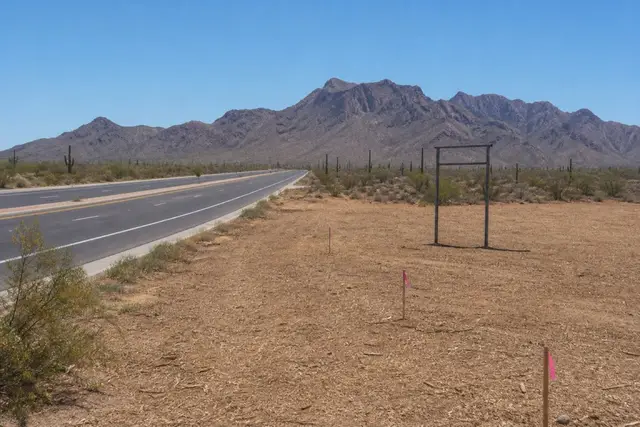
White Tank Clearing Pros puts Sun Valley property owners on the phone with a local land clearing contractor for mulching, brush removal, and pad prep anywhere in the Sun Valley area.
Sun Valley is the part of Buckeye that still looks like the 'before' picture — miles of creosote flat along Sun Valley Parkway, the four-lane built decades ahead of its traffic, running the west flank of the White Tanks toward some of the largest master-planned projects ever drawn in Arizona. Ownership out here is a bet on the growth wave, and clearing work serves the bet: parcels made presentable, stable, and ready to move when the wave arrives.
The characteristic Sun Valley job is speculative-hold maintenance: mulch the creosote and bursage so the parcel shows its dimensions, keep the surface bound so wind can't mine it, flag the corners so buyers and appraisers can actually find them. A mulched parcel photographs better, walks better, and — because the chip layer suppresses regrowth and dust — stays that way for years on one treatment.
The other steady trade is first-improvement work for owners building now: access drives bladed in from the parkway's side roads, homesite envelopes cleared and grubbed, pads roughed for wells and septic. Raw ground means the full desert checklist applies — saguaros and ironwoods mapped and kept, washes crossed properly, dust permits pulled — but it also means no neighbors six feet away, which makes Sun Valley some of the most straightforward machine work in the metro.
Clearing ahead of the wave, without regretting it
The temptation on speculative ground is maximum clearing — scrape it flat and wait. That's the wrong play in Maricopa County: a stripped parcel is a standing dust liability under the county's fugitive-dust rules, an erosion problem in the first monsoon, and a weed bed by the second spring. Mulch-in-place is the patient investor's finish: the parcel reads as managed land, the surface stays put unattended, and nothing about it forecloses a future site plan.
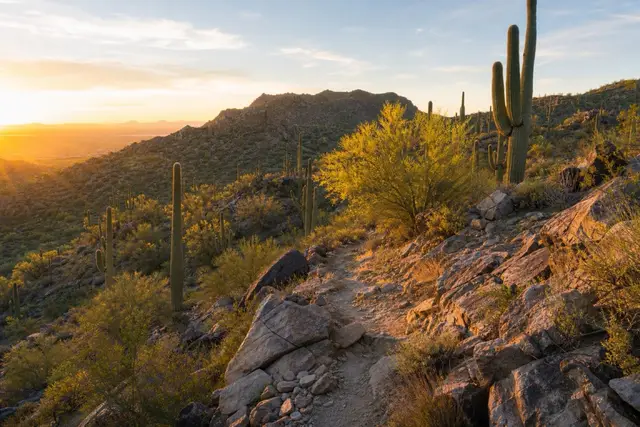
Protected natives are the other reason restraint pays. Saguaros and ironwoods scattered across a Sun Valley section are fixed features under Arizona's plant law — the notice-and-salvage framework applies whenever development eventually forces the issue — and a holding-period clearing simply works around them. They cost nothing to keep, and a parcel with standing saguaros routinely markets better than one without.
First improvements on parkway acreage
Owners building in Sun Valley face raw-land logistics: distances are real, utilities may be a well and a power-pole run, and the parcel's washes have never been asked to coexist with a driveway. The access work sets the tone — a route bladed with crown and proper wash crossings holds through summer storms, while the quick flat scrape becomes a channel; the NWS flash-flood material explains exactly the flows a parkway parcel's drainage can deliver. Soil homework helps here too: the NRCS Web Soil Survey flags the caliche-prone series before the blade finds them.
Sequencing saves money on these jobs: one mobilization that cuts the drive, clears the envelope, roughs the pad, and mulches the frontage beats three separate visits by a wide margin. Sun Valley rewards owners who bring the whole first-year plan to the walk-through.