Forestry mulching, brush removal, and homesite pad prep from Sundance to Aguila — free written bids from a local far-West-Valley contractor.
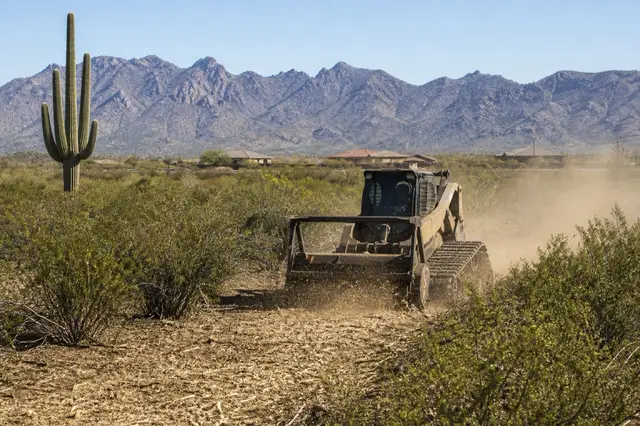
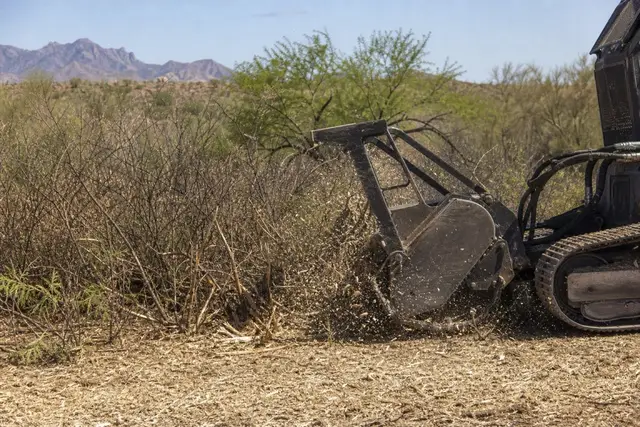
White Tank Clearing Pros connects Buckeye property owners with a local land clearing contractor who reads this desert correctly: creosote and bursage flats that a drum mulcher turns into ground cover in one pass, velvet mesquite and salt cedar rooted deep in the Hassayampa washes, caliche hardpan waiting under the sandy loam to fight a grader, and saguaros that Arizona law — and plain decency — says stay standing. Bids account for Maricopa County's dust-control permitting up front, and every quote arrives free, written, and itemized after an actual walk of the parcel.
Tell us about the ground — a local land clearing contractor replies with written numbers.
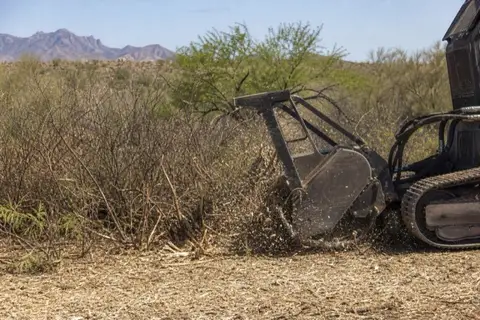
One machine, one pass: creosote, bursage, and small mesquite ground into a chip layer that stays on your soil — no piles, no hauling, no burning.
See the service →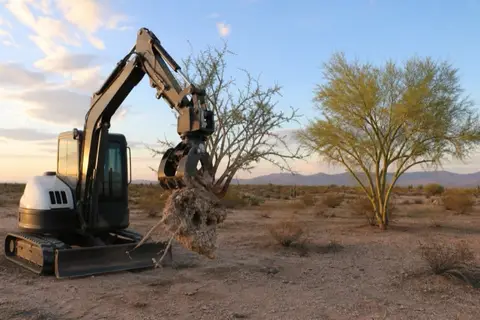
Selective takedown of volunteer mesquite and palo verde — grubbed at the crown so they don't return — while the trees worth keeping keep standing.
See the service →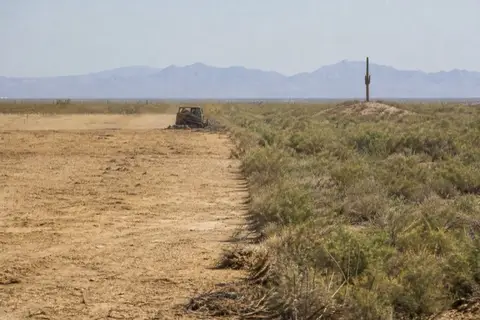
Creosote, bursage, and desert broom knocked down across acreage — snake habitat opened up, fire fuel removed, and the parcel readable again.
See the service →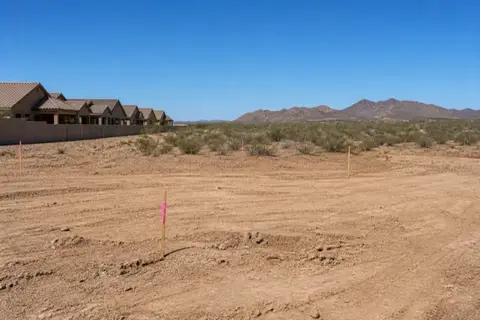
From staked desert to build-ready dirt: vegetation off, roots grubbed, grade roughed, dust permit handled — the step between buying a Buckeye lot and pouring on it.
See the service →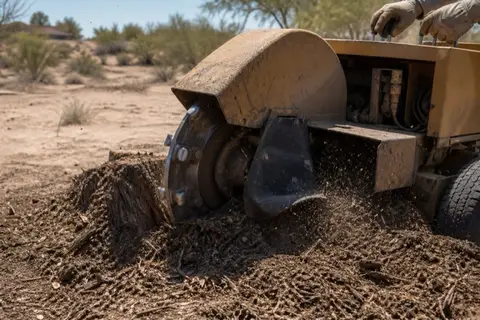
Mesquite, palo verde, and ornamental stumps ground below grade — the resprout engine destroyed, the trip hazard gone, the spot ready to plant or pave.
See the service →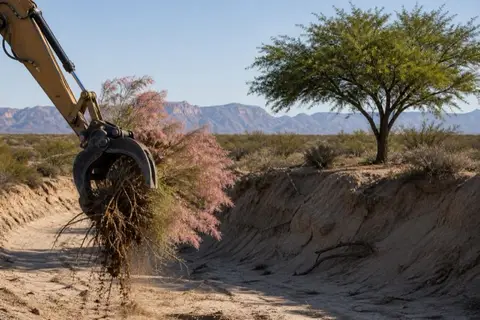
Tamarisk grubbed out of washes and fence lines root-first — plus tumbleweed, buffelgrass, and the other invaders that don't belong on Buckeye ground.
See the service →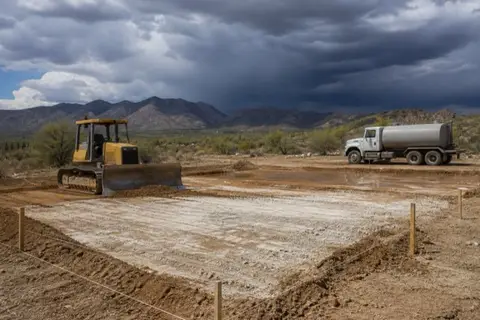
Pads cut level, drainage set away from future slabs, caliche managed instead of discovered — the dirt work that decides how every build on it behaves.
See the service →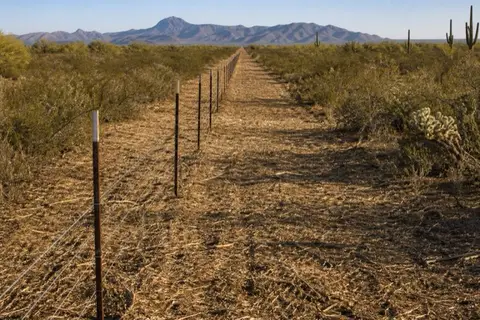
Brush and volunteer mesquite mulched back off your wire — property lines found, fences reachable, and a maintained corridor that stays that way.
See the service →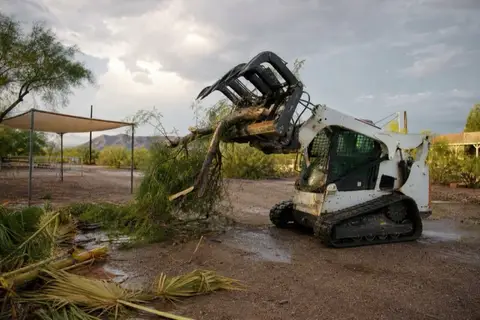
Monsoon aftermath handled fast: snapped limbs grappled and hauled, leaners dropped safely, washes and driveways reopened after the microburst moves on.
See the service →
Cured grass mowed, brush thinned, fuel continuity broken in measured zones around your structures — desert fire math worked in your favor.
See the service →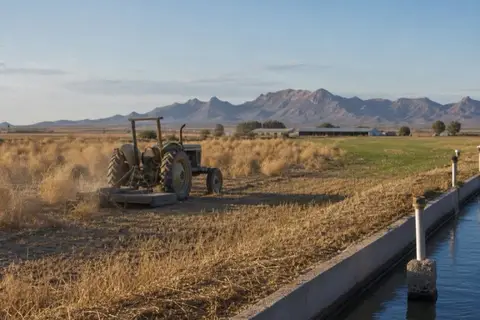
Old Buckeye Valley irrigated ground brought back from tumbleweed and mesquite — mowed, grubbed, ditches opened, ready to grow feed again.
See the service →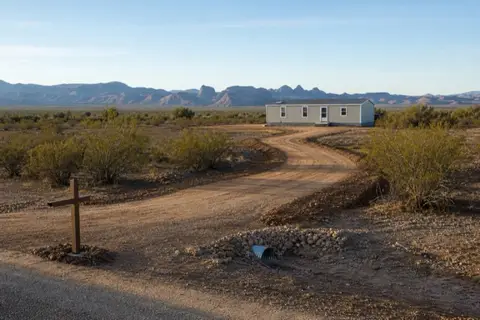
A real route onto raw acreage: corridor cleared, surface bladed and crowned, wash crossings built to take a storm — access that survives its first monsoon.
See the service →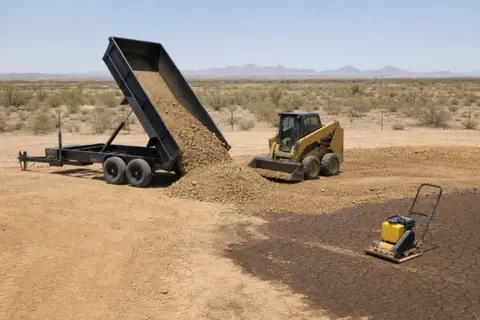
Clean fill delivered, spread, and compacted in lifts — low corners raised, pads brought to grade, and monsoon ponding problems buried for good.
See the service →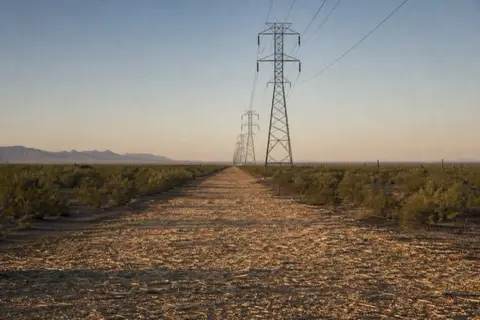
Utility corridors, canal banks, and road frontage mulched to spec — regrowth managed, sight lines held, and every protected native worked around.
See the service →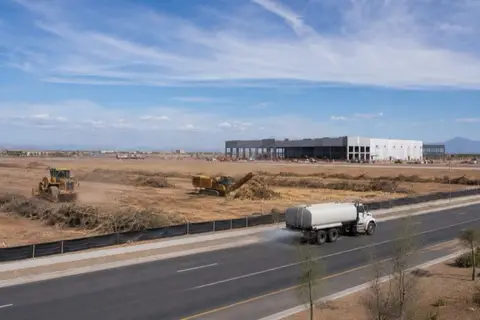
Multi-acre clearing for pads, parks, and phases along Buckeye's growth corridors — permitted, dust-controlled, sequenced to your construction schedule.
See the service →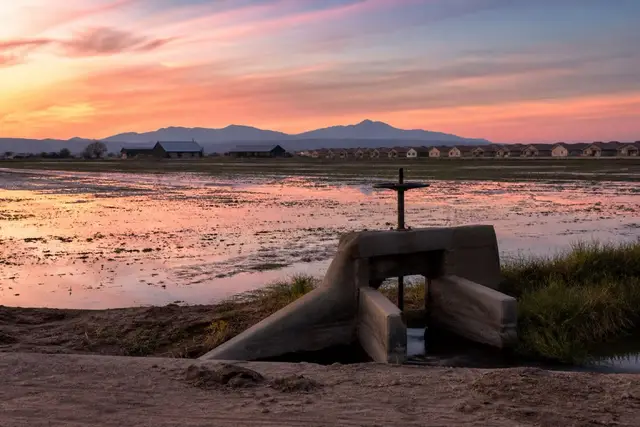
Buckeye has been clearing land since the canal came through in the 1880s — first for cotton and alfalfa, now for rooftops marching toward the White Tank Mountains. That double life is the whole trade here: caliche that fights a ripper on one parcel, hundred-year flood-irrigated loam on the next, saguaros that stay standing on both. Knowing which ground you're on is what separates a clean bid from an expensive surprise.
Mulching light creosote and bursage on flat ground is the cheap end — figure several hundred dollars an acre once the machine is on site. Thick mesquite bosque, salt cedar in a wash, or a pad that needs grading and compaction after the brush is gone all push the number up, and most operators carry a minimum charge that makes small jobs cost more per acre than big ones. The only honest answer is a written bid on your specific parcel, which is exactly what a request through this site gets you, free.
It stays. Saguaros sit in the most protected class of Arizona's native plant law, and clearing work plans around them — the cactus gets flagged and the machine keeps its distance. Protected natives that a project genuinely cannot avoid trigger a written notice to the Arizona Department of Agriculture weeks before any work, which usually routes the plant to salvage rather than destruction. Nobody reputable will blade one out for you, and this site won't connect you with anyone who would.
Often, yes — but for dust, not vegetation. Maricopa County requires a dust-control permit before you disturb a tenth of an acre or more of soil, because the West Valley sits in a federal particulate nonattainment area. A contractor who works Buckeye regularly builds the permit and the water truck into the bid instead of discovering the rule after a county inspector does.
No. The standard approach out here is mulching — brush and small trees get ground where they stand and the chips stay down as a soil cover — or hauling for anything a mulcher shouldn't eat, like salt cedar that needs its roots out. Open burning near Buckeye's rooftops and dust-sensitive air is a headache nobody bids anymore.
Buckeye is a working corridor — machines are already moving between subdivision phases, ranchettes, and commercial pads along I-10 and SR-85 most weeks. Simple mulching jobs commonly land on the schedule within days of a walk-through; monsoon weather in July through September is the one thing that reliably reshuffles the calendar.
No. White Tank Clearing Pros is an independent local marketing site. Your call or form goes to a local land clearing contractor who serves Buckeye and the far West Valley; that operator walks the parcel, writes the itemized bid, and runs the equipment. The quote costs nothing, and everything after the introduction is between you and them.
 White Tank