 White Tank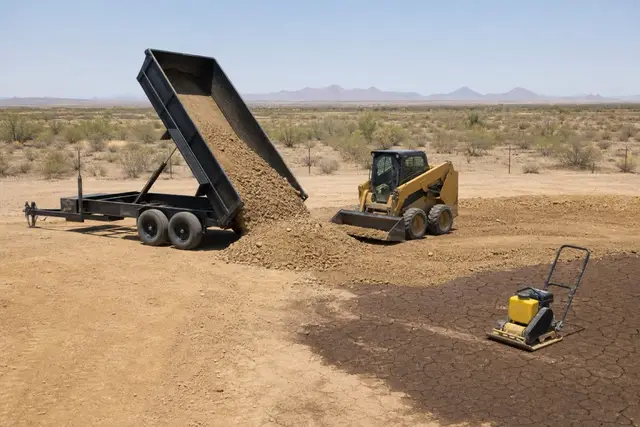
White Tank Clearing Pros puts Buckeye property owners on the phone with a local land clearing contractor when the job is fill dirt services — in Buckeye proper and the desert communities around it.
Fill dirt is the least glamorous thing this site connects people with and one of the most requested. Buckeye's flat parcels hide low spots that only reveal themselves in August — the corner where monsoon water stands for a week, the pad edge that settled, the yard section a previous owner excavated and never restored. Fill service is the fix as a package: material sourced clean, trucked in, spread where it belongs, and compacted so the low spot stays fixed.
Material quality is half the job. 'Fill dirt' spans everything from select native loam to construction spoils with rebar surprises, and the difference decides whether your project holds grade or becomes a settling, weed-sprouting liability. Clean native fill compatible with Buckeye's sandy loams is the default spec; ABC or aggregate goes under anything structural or trafficked; and material with trash, green waste, or unknown history doesn't get on the truck.
Placement technique is the other half. Fill dumped in a pile and pushed flat performs like what it is — loose dirt. Fill placed in measured lifts, moisture-conditioned, and compacted layer by layer performs like ground. The difference shows up a year later: one version has settled into a dish that collects water again, the other is still at grade. Every job here gets the lift-and-compact treatment scaled to its purpose, from garden berms to slab subgrade.
Quantity estimating is where owners get burned buying blind. A low corner 'that needs a few loads' calculates to a specific cubic yardage once it's measured, and trucks price by the load — the walk-through with a laser level turns guesswork into a count you can hold a bid to. Access matters too: full trailers need turning room, and where they can't reach, a skid-steer shuttles material the last stretch at a known hourly cost rather than an improvised one.
Why water is the real client on most fill jobs
Nearly every residential fill request in this valley is a drainage complaint wearing work clothes: water stood somewhere it shouldn't, and dirt is the remedy. That makes grade design part of the service — raising a low spot without deciding where its water goes next just moves the pond to a new address, possibly against your foundation. The pattern to plan for is the monsoon cell that drops an inch in under an hour; the Phoenix NWS office documents that regime every summer, and fill placed with positive fall and a defined discharge path is what survives it.
Soil compatibility quietly matters as much. Fill that drains very differently from the native ground creates perched water at the interface — the same trick caliche plays naturally, as the UA Extension caliche guide explains. Matching material to the site, or deliberately layering aggregate where drainage is the goal, keeps the fix from creating a subtler version of the original problem.
Trucks, dust, and doing imports by the book
Fill work is earthmoving, and the county treats it as such: once the disturbed footprint tops a tenth-acre — easy to do when you count the spread area and truck paths — brings the dust-permit requirement, water during placement, and track-out control where trucks meet pavement. Neighbors on Buckeye's rural roads notice dust plumes and mud trails, and so do inspectors; running the job clean costs little and buys a lot of goodwill.
Sourcing deserves one more sentence of diligence: material from an unknown site can import weed seed — tumbleweed and buffelgrass ride in fill constantly — along with debris you'll meet during the next dig. Asking where the dirt comes from is a professional question, not a rude one, and any supplier this site connects you with expects it. The NRCS soil survey can even tell you what your parcel's native profile looks like, which is the spec the import should match.