 White Tank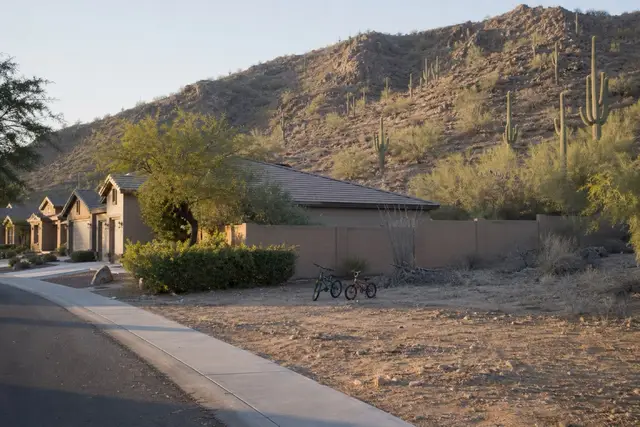
White Tank Clearing Pros puts Festival Foothills property owners on the phone with a local land clearing contractor for mulching, brush removal, and pad prep anywhere in the Festival Foothills area.
Festival Foothills sits about as far northwest as Buckeye addresses go — a family community tucked against the high-desert slopes where the block walls genuinely mark the line between subdivision and open state land. That edge is the neighborhood's best feature and its standing maintenance item: the desert on the other side of the wall grows fine fuel every wet winter, sheds tumbleweed every windy spring, and hosts the wildlife that treats an untrimmed yard as habitat.
Most Festival Foothills work is edge management. Defensible-space cuts thin the brush band where yards meet the slope — cured annual grass mowed, dead brush out, continuity broken — while keeping the view and the saguaros that make the setting worth the drive. Boundary work respects the property line exactly: state land beyond the wall is not yours to clear, and the machines work to the survey, not the scenery.
Inside the walls, the trade is standard growth-community fare: new-lot clearing on the phases still building, volunteer mesquite and palo verde out of yards before they entrench, and storm cleanup after the monsoon cells that build against the foothills — this corner of Buckeye catches outflow winds early and hard.
The foothills fire seam, managed honestly
Living against open desert means owning your side of the fuel equation. The zone framework in the Firewise program maps cleanly onto a Festival Foothills lot: keep the five feet against the house down to gravel and mineral soil, thin and separate what grows inside the wall, and mow the annual flush before June cures it. The slope beyond the wall belongs to the state, but embers don't read property lines — which is why the NFPA's research keeps pointing at the home ignition zone as the part you control and the part that decides outcomes.
Grass years deserve respect here specifically: the bajada slopes above the community carry exactly the red brome flush that turns a roadside spark into a running grass fire. After a wet winter, the smart schedule is early — book the mow while the grass is green, not after the first hot windy week has everyone calling at once.
Wildlife, washes, and the desert-boundary yard
A yard on the desert seam gets desert visitors — packrats building against the AC pad, snakes hunting the rodents, javelina testing the gate. Vegetation management is the humane, effective response: clear the brush cover and debris piles that shelter rodents, and the food chain relocates on its own. The UA Extension's urban-wildlife guidance backs the same order of operations: habitat first, exclusion second.
The small washes threading down from the foothills matter too: they concentrate both storm flow and vegetation, and the lots they cross should keep them open rather than fenced full of debris. Monsoon cells build against this terrain early in the season — the Phoenix forecast office's storm climatology shows the foothills corridors lighting up first — and a clear wash is the difference between water passing through and water choosing a new route through your yard.