 White Tank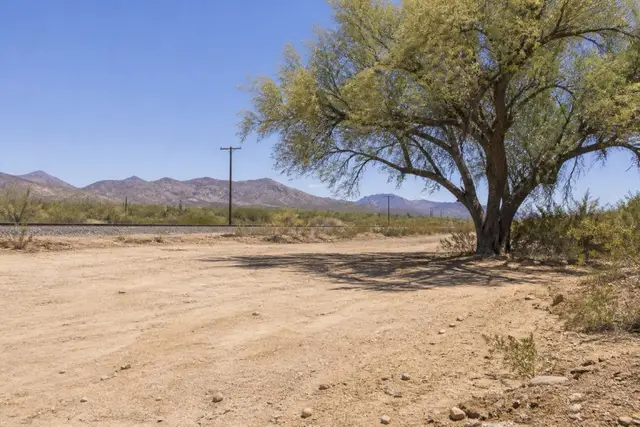
White Tank Clearing Pros puts Morristown property owners on the phone with a local land clearing contractor for mulching, brush removal, and pad prep anywhere in the Morristown area.
Morristown is a dot on the map with a lot of acreage around it — a crossroads community of 186 at the 2020 census, sitting where State Route 74 leaves US 60 for Lake Pleasant, with the railroad grade and the Vulture Mountains for a skyline. Ownership here is acreage ownership: five- to forty-acre desert parcels held for horses, privacy, retirement builds, or simply held — and all of them need the occasional visit from a machine to stay usable.
The work profile is classic high-flats desert: creosote and bursage mulched to open a parcel's interior, scattered mesquite and catclaw grubbed where lanes and pads go, tumbleweed mowed off before the wind redistributes it along the highway fence, and first-improvement packages — drive, envelope, pad — for owners finally building the place they bought the land for. Elevation runs higher than Buckeye proper here, the granite country beginning to show, and dig conditions vary parcel to parcel accordingly.
Morristown's position writes its own use case: everything headed to Lake Pleasant passes the junction, and parcels near it carry small-commercial ambitions — storage yards, trailer parking, staging ground. Those come with the county's dust and stabilization expectations at commercial seriousness, which is exactly how the bids treat them.
Holding acreage that holds its value
Most Morristown parcels spend years between purchase and project, and the difference between held and neglected is a maintenance rhythm: a mulching pass that keeps the interior walkable, weed mowing before seed set, and fence corridors kept visible. The surface-stability rules reach even out here — the county's dust framework cares about disturbed acreage wherever it sits — and the mulch-cover approach keeps a parcel both compliant and presentable with essentially no ongoing effort.
Due diligence before heavier work pays at this end of the valley: the NRCS soil survey shows where the flats give way to shallower, rockier profiles, which forecasts everything from fence-post digging to septic feasibility. Ten minutes with the map before the walk-through makes the walk-through better.
Building at the junction: first improvements done once
When a Morristown parcel finally builds, the first-improvement sequence is everything: access drive cut and crowned from the county road, wash crossings handled properly — SR-74 country drains sharply toward the Hassayampa system, and the NWS's flash-flood material applies to every dip in every lane — then the homesite envelope cleared and grubbed, and the pad roughed with water assigned somewhere to go. One mobilization, one bill, and the parcel is a site.
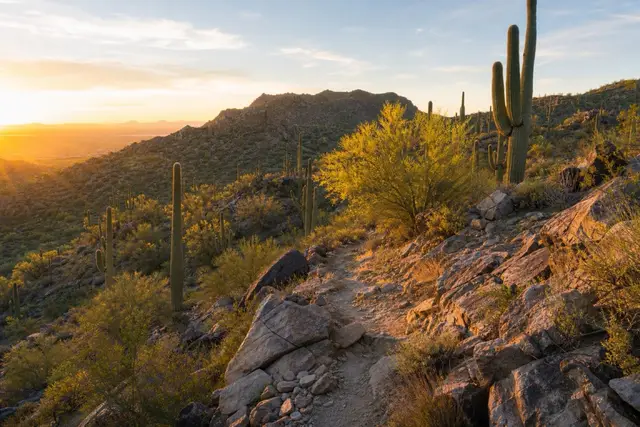
The native inventory rides through all of it: this is saguaro-and-ironwood country on its rockier edges, and the protected-plant rules follow the state framework regardless of how remote the ground feels. Designing the drive and envelope around the protected stock at flagging stage costs nothing; discovering the conflict at excavation stage costs weeks.