 White Tank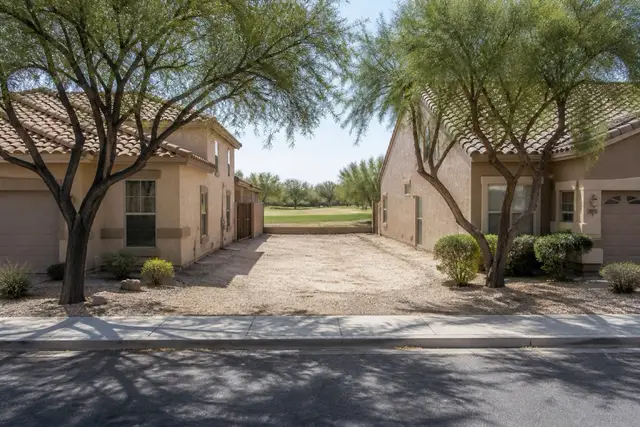
White Tank Clearing Pros puts Sundance property owners on the phone with a local land clearing contractor for mulching, brush removal, and pad prep anywhere in the Sundance area.
Sundance is Buckeye's settled side — one of the master-planned communities that carried the city's first big growth wave along the Watson Road corridor, now a mature neighborhood of tile roofs, block walls, golf-course green belt, and mesquite street trees that have had two decades to get comfortable. Clearing work here is precision work: the remaining infill lots, the backyard that got away from a previous owner, the tree that outgrew its corner.
Tight access defines the toolkit. Machines that fit a standard side gate — compact tracked loaders, walk-behind grinders — do most Sundance jobs, protecting the flatwork on the way in and the neighbor relations on the way through. A quarter-acre infill parcel between lived-in homes gets cleared with the block's irrigation lines located, the shared wall padded, and the dust watered down before it reaches anyone's patio furniture.
The vegetation is a different mix than raw desert: overgrown oleander rows, volunteer mesquite against block walls, palms nobody pruned, bermuda gone feral in a rental's backyard — plus the occasional original creosote holdout on an unbuilt lot. It all comes out cleanly, gets hauled rather than burned, and leaves ground a landscaper or builder can start on the same week.
Infill lots: small parcels, full checklist
An unbuilt lot inside an established Sundance block still runs the full Buckeye clearing checklist, just at neighborhood scale: utilities located before grubbing, the county's dust rules respected — the tenth-of-an-acre trigger for a dust permit catches most buildable lots plus their work area — and any protected native handled by the book. The difference is choreography: staging on a lived-in street, truck timing around school pickup, and a watered surface so the afternoon breeze doesn't sandblast the neighbors.
Grubbing matters more on infill than owners expect, because the lot is going straight to construction. Root crowns under the future slab and drive come out completely, the cavities get compacted backfill, and the finished rough grade sheds water toward the street rather than the neighbor's wall — the small-lot version of the drainage discipline the Phoenix NWS's monsoon record justifies every August.
Reclaiming the yard that got away
Sundance is old enough that some landscapes have outlived their owners' plans — oleanders grown into twelve-foot walls, mulberry roots lifting pavers, a mesquite planted three feet from the foundation in 2006 doing what mesquites do. Yard reclamation strips the failures, grinds the stumps below grade, and leaves the hardscape intact; the UA Extension's desert-landscaping guidance is the reference for what to replant so the next twenty years go better than the last.
Two Sundance-specific notes: golf-course-adjacent lots often carry HOA visibility rules that make a tidy, mulched finish worth specifying in the bid, and the community's mature mesquite street trees are assets worth protecting during any machine work — a wide berth and padded access routes are standard practice, not extras.