 White Tank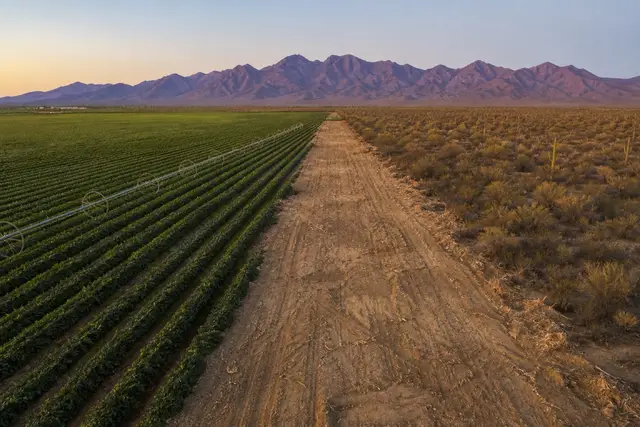
White Tank Clearing Pros puts Aguila property owners on the phone with a local land clearing contractor for mulching, brush removal, and pad prep anywhere in the Aguila area.
Aguila is the last stop west — a farm hamlet of 565 at the 2020 census, out where US 60 runs the gap between the Harquahala and Vulture ranges and the irrigated ground grows the cantaloupes that made the town's name. The landscape is a hard seam: laser-leveled melon and hay fields on one side of the road, raw creosote desert on the other, and parcels that participate in both economies.
Farm-adjacent clearing has its own etiquette. Field edges and ditch banks get cleared with the farm's water schedule in mind; tumbleweed and brush get handled before harvest traffic needs the road frontage; and windblown sand — Aguila's specialty, with all that open fetch — argues for mulch covers and windbreak retention rather than bare-scraped finishes. Desert-side work is the standard far-west package: parcels mulched open, lanes bladed, pads cut for the scattered homesteads and hunt-camp holdings that dot the flats.
Distance is the honest variable. Aguila sits at the far edge of the coverage map, and small jobs get batched with other far-west work rather than mobilized solo — the scheduling conversation says so plainly, and multi-day jobs are unaffected. What doesn't change with distance is the spec: grubbed means grubbed, crowned means crowned, and the bid you accept is the invoice you get.
Where the field meets the desert: managing the seam
The farm-desert boundary generates most of Aguila's clearing calls. Uncleared desert edge donates tumbleweed and rodents to the field; the field donates water that grows the desert edge into thicket — and the seam parcels collect both problems. The working answer is a maintained buffer: brush mulched back on a cycle, woody volunteers grubbed before they establish, and the ditch and fence lines kept exposed. The UA Extension's agronomy and weed-management resources cover the field side of the same fight.
Wind management is non-negotiable here: the Aguila valley's fetch builds the kind of blowing-dust events the NWS wind-safety pages warn about, and bare-scraped ground contributes to them directly. Mulch-in-place finishes, retained windbreak rows, and stabilized surfaces are how far-west clearing is done responsibly — and, under the county's dust rules, how it's done legally.
Desert holdings under the Harquahalas
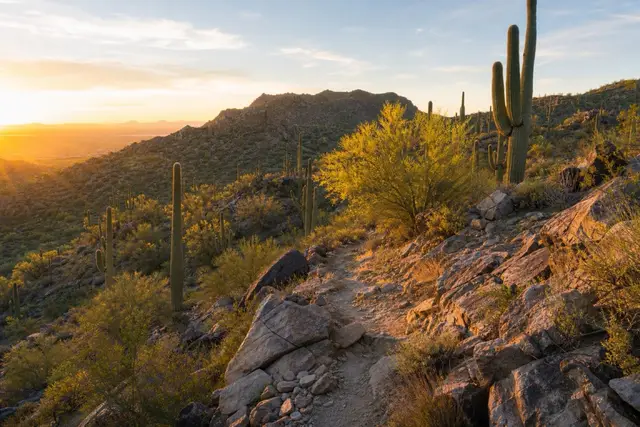
The creosote flats south and west of town hold parcels bought for hunting camps, winter bases, and someday-homesteads, and their needs are simple and specific: a lane that holds, a pad that drains, an interior you can walk, and fences you can find. The NRCS soil mapping covers even this far corner of the county and forecasts the dig conditions; the protected-native inventory — saguaros especially, marching up the Harquahala bajadas — rides under the same state framework as everywhere else, no matter how empty the country feels.
The far-west bonus is that jobs here are pleasant to do right: open ground, workable soils, no neighbors to choreograph around. Owners who bundle their wish list — lane, pad, mulching, fence corridor — into one mobilization get the best pricing this side of the White Tanks, and a parcel that's genuinely ready for whatever the someday plan turns out to be.