 White Tank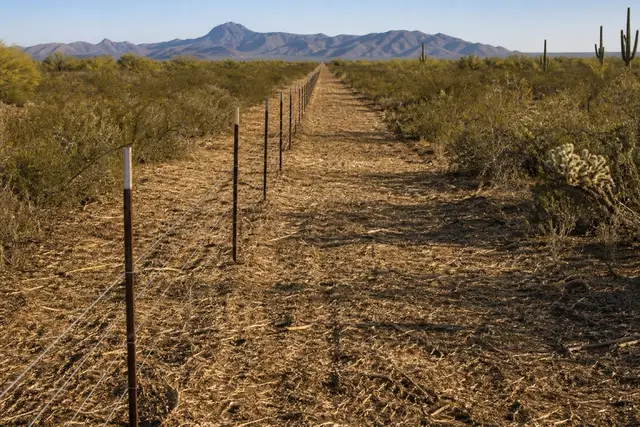
White Tank Clearing Pros puts Buckeye property owners on the phone with a local land clearing contractor when the job is fence line clearing — in Buckeye proper and the desert communities around it.
Out past Buckeye's subdivisions, fences do real work — holding horses, marking sections, keeping open-range cattle out of your garden — and the desert works just as steadily at burying them. Mesquite volunteers along the wire where birds perch and seed; creosote leans into the corridor; tumbleweed stacks against the mesh until the wind load tests every staple. Fence line clearing is the corrective: a mulched corridor down both sides of the wire, wide enough to walk, inspect, and repair.
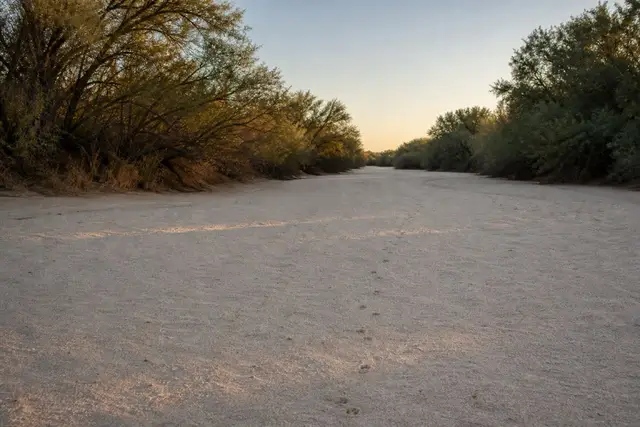
The standard cut is a blade-width or more each side, brush sheared to ground level and chipped in place, with volunteer trees inside the corridor grubbed so they don't simply return. Corners, gates, and stretch panels get hand-finished — the places you actually work a fence are the places a machine shouldn't get intimate with the wire. Where a line crosses a wash, the clearing opens the crossing so debris has somewhere to go besides your fence during storm flow.
There's a legal dimension owners appreciate: you can't maintain — or defend the location of — a line you can't see. Clearing exposes the actual fence for comparison against the actual survey before disputes calcify, and more than one Buckeye acreage owner has discovered their 'fence line' and their deeded line parted ways decades ago. Machines follow the survey stakes when they exist; getting them set first is money well spent on any line in doubt.
Open-range country adds urgency. In much of unincorporated Maricopa County the practical burden of fencing cattle out falls on the landowner, which makes an intact, inspectable fence more than tidiness — it's what stands between your alfalfa patch and someone's herd. A cleared corridor turns fence inspection from an expedition into a fifteen-minute drive.
Why fence corridors fail fast in this desert
The failure sequence repeats on every neglected line: brush grows into the wire, wind loads the brush, staples work loose, wires sag, and the sagging fence catches more debris — a feedback loop that accelerates each monsoon season. Summer outflow winds are the multiplier; the NWS wind-safety material describes the same gust fronts that stack tumbleweed six feet deep against far West Valley fences every year. A clear corridor breaks the loop by giving wind nothing to press against the wire.
Fire adds the second argument. A brushy fence line is a linear fuel bed running unbroken across your parcel — precisely the configuration that carries roadside ignitions into acreage, a pattern Firewise guidance flags in every fuels chapter. Mulched corridors double as modest fuel breaks, which is why ranch managers here treat fence clearing as fire work that happens to help the fence.
Keepers, corners, and the finished corridor
A fence line isn't cleared to sterile: shade trees at corners stay if you want them, wolfberry that feeds quail can stay, and any saguaro within reach of the corridor is flagged and untouchable as always — the state's native plant rules follow the machine down every stretch of wire. What goes is the woody volunteer growth actually threatening the fence, grubbed at the crown where it stands inside the corridor so the clearing lasts more than a season.
The finished product is walkable ground on both sides of visible wire: chips down as cover, T-posts exposed for inspection, gates swinging free, wash crossings open. Most owners pair the first clearing with a light maintenance interval — a quick mulcher pass every second or third year runs a sliver of the first cut's cost and keeps the corridor permanently serviceable.