 White Tank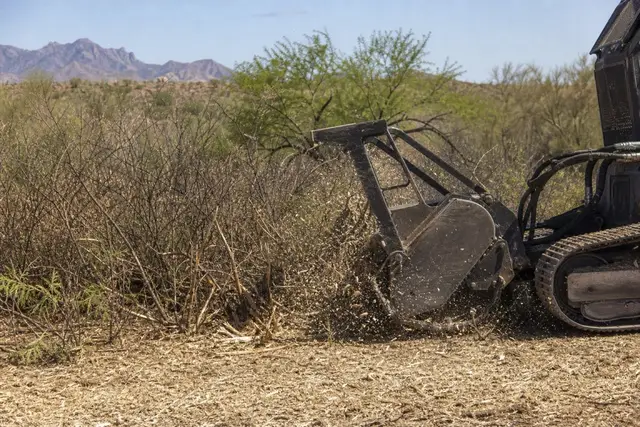
White Tank Clearing Pros puts Buckeye property owners on the phone with a local land clearing contractor when the job is forestry mulching — in Buckeye proper and the desert communities around it.
Forestry mulching fits Buckeye ground the way few methods do. A drum mulcher on a tracked skid-steer moves through creosote, bursage, and young mesquite at walking pace and leaves nothing behind but a carpet of chips — the brush is simply gone, converted to cover, with no windrows to push, no trailer loads to run up SR-85, and no burn pile smoldering next to a subdivision that wasn't there two years ago.
That chip layer earns its keep after the machine loads out. Bare, bladed desert soil in the far West Valley crusts, cracks, and lifts into the air the first afternoon the wind comes up — and blowing dust is a regulated problem in Maricopa County, not just an annoyance. A few inches of ground-up brush holds the surface down, shades the soil, and breaks the momentum of monsoon sheet flow instead of letting it cut rills across your parcel.
Mulching is also the gentle option for ground you want to stay desert. Because the drum works above the soil line, the root structure holding the surface together is left in place, and individual trees are easy to keep — a healthy ironwood here, a green palo verde there, and every saguaro without exception. The result reads as cleaned-up desert rather than a scraped moonscape, which matters whether you're selling the parcel or living on it.
Where mulching stops making sense, an honest operator says so. Salt cedar needs its roots addressed or it returns thicker; a homesite pad needs grubbing and grading, not just a haircut; and trunks past roughly eight inches are slow, expensive mulching that other iron does faster. The right bid often pairs a day of mulching with an hour of excavator work — which is exactly the kind of line-item detail a written quote should show you.
Pricing runs by the acre with density driving the number: sparse creosote flat is quick work, mixed mesquite-and-brush ground costs more, and thicket along a wash costs the most. A walk-through first, then a firm written figure — that's the sequence every request through this site is set up to produce.
Why chips beat blades on creosote flats
The default instinct — hire a blade, scrape it clean — is usually the expensive path on Buckeye's flats. Scraping strips the desert pavement and root mat that keep fine sediment anchored, and the county's air-quality rules treat that freshly disturbed surface as your responsibility: stabilize it or answer for the dust. The Maricopa County Air Quality Department's dust-control program exists precisely because a scraped acre out here becomes a PM10 source with the first 25-mile-per-hour gust.
A mulched acre behaves differently. The surface stays bound, the chips knock down wind at soil level, and regrowth comes back as scattered shoots you can manage rather than a dust bowl you must water. For owners holding land ahead of a build — common along Sun Valley Parkway and the northern edges of town — mulching keeps the parcel presentable and compliant for years at a fraction of what repeated blading and watering would run. The University of Arizona's extension service has spent decades making the case for ground cover as the cheapest erosion and dust insurance desert soil can get, and a mulch mat is exactly that.
Working around what must stay standing
Every mulching job in this valley starts with a flagging pass, because Arizona treats much of its native flora as protected property of the landscape. Saguaro, ironwood, and most cacti fall under the state's native plant protections — the UA Extension's plain-English guide to the Arizona Native Plant Law is worth ten minutes of any landowner's time. Protected plants a project can't avoid require advance written notice to the state agriculture department, filed weeks before iron touches ground, and salvage is the usual outcome rather than destruction.
In practice, good operators design around the protected stuff instead of papering over its removal. The mulcher's agility is the advantage: it can grind a thicket to within a few feet of a saguaro's root zone, leave a clean radius, and move on — no other clearing method threads that needle as neatly. When your bid arrives, it should say which plants stay; if it doesn't, ask why.