 White Tank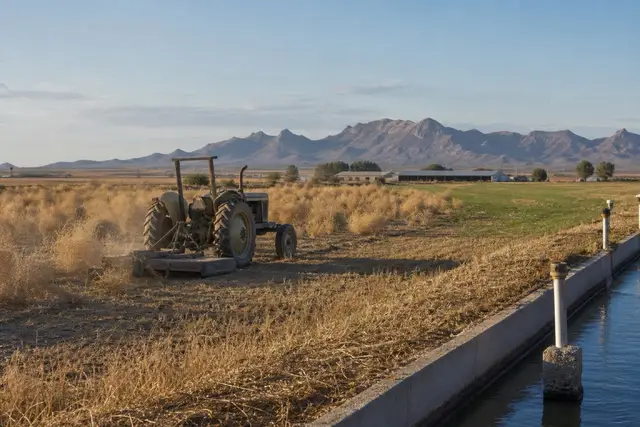
White Tank Clearing Pros puts Buckeye property owners on the phone with a local land clearing contractor when the job is pasture & acreage reclamation — in Buckeye proper and the desert communities around it.
The old Buckeye Valley south of town has grown feed for over a century — flood-irrigated bermuda, alfalfa, and sudan on laser-leveled ground fed by canal water off the Gila. When a parcel like that sits idle even a few seasons, the desert files its claim: Russian thistle by the ton, bermuda gone to rank thatch, mesquite volunteering along every ditch, and johnsongrass in the wet corners. Reclamation is the process of evicting all of it and getting the ground back to work.
The sequence is unglamorous and effective. Heavy rotary mowing knocks the standing weed mass down to something the next implements can handle. Grubbing pulls the woody volunteers — mesquite along ditches comes out crown and all, or it returns by fall. Ditch lines and turnout structures get cleared and exposed, because an irrigated pasture is really a water-delivery machine with grass on top, and the machine has to work before the grass matters.
What happens next depends on your goal. Horse turnout wants the surface smoothed, re-leveled where flood irrigation cut channels, and reseeded into the borders. Hay ground wants a discussion about tillage, pre-irrigation, and whether the old stand is worth rescuing or the field should be started clean. Simple weed-abatement compliance — keeping the county and neighbors happy — may just want the mow-and-grub cycle on a maintenance schedule.
Two Buckeye-specific notes ride on every job. Dried tumbleweed is a fire and fence menace and gets hauled or mulched before wind redistributes it across your neighbor's section. And on ground with a farming past, buried surprises — concrete pipe, old fence wire, caliche-set posts — are standard archaeology; a magnet sweep and a careful first pass protect the mower that does the rest.
Water rights, ditches, and the bones of old farm ground
An idle parcel with irrigation history is worth more than its weeds suggest — if its bones are intact. The walk-through checks what the deed and the district say against what's physically there: headgates that still turn, concrete ditch that hasn't heaved, borders that still hold a flood set. Arizona's water accounting runs through the state's water-management framework, and parcels inside irrigation districts carry delivery arrangements worth understanding before you invest in the surface; the USGS water resources pages give useful background on how Lower Colorado basin supply actually moves.
The reclamation itself protects those bones: mowing and grubbing work around structures rather than through them, ditch cleaning exposes rather than buries the grade, and re-leveling respects the field's original fall. The NRCS soil survey is worth a look here too — Buckeye Valley's irrigated soils differ meaningfully from the desert loam a mile north, and their salinity and drainage notes predict how a restarted field will behave.
From weed lot to working ground, in the right order
Owners usually call about the visible problem — chest-high tumbleweed — but sequence determines cost. Mow first, then grub, then handle soil: reversing any of it wastes machine hours. The University of Arizona Extension's forage and pasture guidance covers the agronomy of what follows — variety selection, stand establishment, irrigation scheduling — and is the right reference once the ground is physically ready to plant.
One warning from experience: don't let cleared farm ground sit bare through a monsoon. Bare, disturbed silt loam crusts, sheds water, and grows the next tumbleweed crop from the seed bank with enthusiasm. Either plant behind the reclamation, keep a mulch cover down, or schedule the work so establishment follows immediately — the Phoenix NWS seasonal calendar makes fall the natural window for most restarts.