 White Tank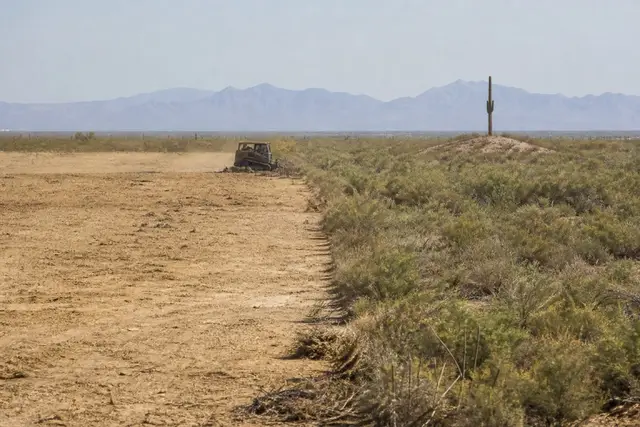
White Tank Clearing Pros puts Buckeye property owners on the phone with a local land clearing contractor when the job is brush & underbrush clearing — in Buckeye proper and the desert communities around it.
Left alone, far West Valley acreage disappears into itself. Creosote closes ranks at chest height, bursage and burroweed fill the gaps, desert broom colonizes every scrape, and within a few seasons you can't walk your own property line, can't see the wash cutting your back corner, and can't tell what the parcel actually looks like under the gray-green blanket. Brush clearing is the reset: mechanical removal of the shrub layer so the land is visible, walkable, and usable again.
The method matches the goal. Where you want the desert floor intact — most residential acreage — a brush-cutter or mulcher head shears the shrub layer and leaves roots and grade alone. Where the brush must be gone entirely, grubbing pulls crowns so regrowth doesn't follow. Most Buckeye jobs mix both: mulch the open flats, grub the strips where a garden, corral, or driveway is coming.
What clearing buys you out here is concrete. Rattlesnakes lose the cover that brings them to your door. Cured brush and annual grass stop being a fuse laid up to your structures. The parcel shows its bones to an appraiser or buyer. And a five-acre lot that felt like one usable acre suddenly has room for the shop, the arena, or the second well the county already said you could have.
Every saguaro on the parcel is flagged and kept, along with any ironwood or specimen palo verde you want preserved — the machine works around keepers all day without complaint. Chips stay down as ground cover unless you'd rather see raw desert floor, in which case haul-off gets its own line on the bid.
Brush, wind, and the county's dust math
Brush clearing in Maricopa County comes with an air-quality dimension most new landowners haven't met. The moment soil disturbance crosses a tenth of an acre, the county expects a dust-control permit with a plan for keeping the surface from going airborne — water, cover, or track-out control, depending on the work. Shear-cutting that leaves the root mat in place often keeps disturbance minimal; grubbing flips the calculation and makes the permit and watering plan part of the bid.
Wind is the enforcer. The same afternoon gusts that build dust walls along I-10 will strip a freshly scraped parcel and mail the evidence to your neighbors. The National Weather Service's high-wind guidance is a useful read for anyone holding open ground here — and a good argument for the mulch-and-leave-cover approach on land that isn't building anytime soon.
The fire logic of a cleared shrub layer
Buckeye's desert doesn't burn the way forest country does, but it burns — and the fuel is precisely the layer brush clearing removes. Wet winters flush red brome and other annuals up through the shrubs; by June the whole assembly is cured, continuous, and one roadside spark from moving. Breaking that continuity around structures and along road frontage is the core practice the NFPA's wildfire research keeps validating: fires starve where fuels stop touching.
Timing the work matters less than keeping it current. A parcel cleared once and forgotten re-loads in a few wet seasons; a parcel on a light maintenance cycle — a mow of the annuals in late spring, a mulcher pass every few years — stays defensible for a fraction of the original cost. If the land sits near the White Tank foothills, pair this with a proper defensible-space cut around the buildings themselves.