 White Tank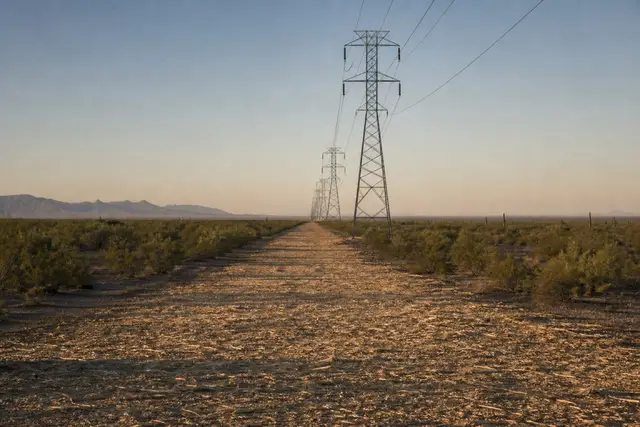
White Tank Clearing Pros puts Buckeye property owners on the phone with a local land clearing contractor when the job is right-of-way clearing — in Buckeye proper and the desert communities around it.
The far West Valley is stitched with corridors that have to stay open: transmission lines running toward the big generating stations west of town, gas and fuel pipelines, canal and lateral banks, road shoulders, and the drainage easements threading every new Buckeye subdivision. Right-of-way clearing is the discipline of keeping linear ground at a specified condition — mile after mile, on schedule, documented.
Corridor work differs from parcel work in tempo and constraints. Production matters: a mulching machine that holds a steady pace down miles of easement beats a faster machine that breaks down at mile three. Consistency matters more: the spec — clearance widths, stub heights, what's retained, how debris is handled — holds from one end to the other, because the client's inspector will check the middle. And the constraint list is longer: locates before any ground engagement, clearance protocols near energized infrastructure, access agreements across private ground, and traffic control where the corridor meets public roads.
The vegetation itself is familiar Buckeye fare — creosote and bursage on the flats, mesquite and salt cedar anywhere water concentrates, tumbleweed against every fence the corridor crosses. Mulching in place is the default: no windrows to re-handle, ground cover left to suppress regrowth and dust, and a finished appearance that keeps adjacent landowners civil. Salt cedar on canal banks gets the roots-out treatment, since sheared tamarisk simply re-votes next season.
Protected natives get corridor-grade planning: saguaros inside an easement are mapped and worked around as fixed objects, and where a corridor's function genuinely can't tolerate a protected plant, the state notice-and-salvage process runs before the machines arrive. Utilities have relocated towers for less.
What a corridor spec actually contains
A serviceable right-of-way contract is written in measurables: cleared width in feet, maximum stub height, retained-vegetation rules, debris disposition, and re-treatment cycle. The fire dimension increasingly drives those numbers — a brushy easement is a wick laid across the landscape, and the fuels logic in the NFPA's wildfire work applies to corridors exactly as it does to homes: break continuity, remove the dead load, keep flame lengths where crews can work.
Dust and air compliance ride along on every mile inside Maricopa County's boundaries; mechanized clearing across open desert is dust-generating activity, and the county air-quality department's requirements — permits, watering capability, records — belong in the job file, not in the category of things discovered during an inspection. A contractor who runs corridors professionally shows up with that file already built.
Weather windows and the maintenance rhythm
Corridor schedules in this desert bend around two seasons: the monsoon months, when outflow winds ground dust-sensitive work and wash crossings turn briefly impassable, and the spring green-up that makes regrowth surveys accurate. Watching the Phoenix forecast office's pattern outlooks is part of planning a multi-week mobilization — a corridor half-cleared when the first haboob arrives is a liability with your name on the access agreement.
Re-treatment cycles out here are mercifully long. In seven-inch rainfall country a properly mulched corridor often holds spec for years, with salt-cedar reaches and irrigated-edge segments the exception that earns annual inspection. Building the survey cycle into the contract — a fast windshield-and-drone pass, then targeted touch-up — keeps miles of easement at spec for a fraction of blanket re-clearing, which is the arithmetic that wins corridor work in the first place.