 White Tank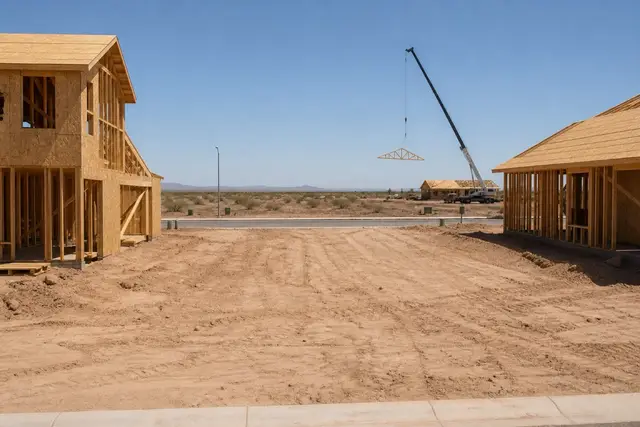
White Tank Clearing Pros puts Blue Horizons property owners on the phone with a local land clearing contractor for mulching, brush removal, and pad prep anywhere in the Blue Horizons area.
Blue Horizons belongs to Buckeye's newest chapter — the subdivision ground south of I-10 where framing crews and landscape trucks outnumber every other trade and the block maps fill in by the quarter. Clearing here runs at construction pace: builder lots turned quickly and correctly, owner lots prepped for pools and casitas, and the brand-new-homeowner jobs that follow every closing.
Lot work in an active phase is sequencing work. The machine shares the street with concrete trucks and crane days; dust watering runs constantly because the county's rules and the sales office's showhomes both demand it; and grubbed, compacted, correctly-graded ground gets handed to the next trade on the date promised. Small margins of professionalism — locates verified, track-out swept, silt fence respected — are what keep a clearing sub on a builder's call list.
The homeowner side arrives about a year after each closing: backyard-of-dirt turned into backyard-with-a-plan, which often starts with grade corrections and fill where the builder's rough grade ponds; volunteer weeds and tumbleweed cleared from the lot next door's vacant phase; and the first desert landscaping put in right. New-build neighborhoods generate small dirt jobs by the hundreds, and small jobs done well are this trade's best advertising.
The vacant-lot problem every new phase lives with
Until a phase closes out, finished homes sit next to open lots — and open, disturbed lots grow Russian thistle like it's contracted to. By spring, unmanaged parcels ship tumbleweed into every yard downwind, and by June the cured weed load is a fire and fence nuisance. The county's dust-stabilization expectations apply to whoever holds those lots, and periodic mowing before seed set is the cheap version of compliance. Homeowners can't clear ground they don't own, but builders and HOAs respond to specific, photographed requests — and the mowing itself is a fast, inexpensive machine pass.
On your own lot, the same biology argues for finishing the yard sooner than later: bare builder grade is a seed bed. Even an interim treatment — a gravel cover, or decomposed granite over fabric — ends the weed cycle and the mud-after-monsoon cycle in one move.
Getting a new-build yard's dirt right the first time
Builder rough grade meets code, but 'drains away from the foundation' and 'drains where you want it' are different standards — and pool builds, casitas, and hardscape all re-ask the drainage question. The pattern worth designing for is the short violent monsoon cell; the Phoenix NWS climatology makes clear that a yard here will meet an inch-per-hour storm long before it meets a gentle soaker. Fill placed in compacted lifts, swales that carry water to the street, and grades set before flatwork: cheap now, disruptive later.
South-of-I-10 soils add a footnote: this ground transitions toward the Gila River floodplain's finer soils, and caliche lenses still appear — the UA Extension's caliche guide is worth reading before anyone prices you a pool excavation, because dig conditions on adjacent streets can genuinely differ.