 White Tank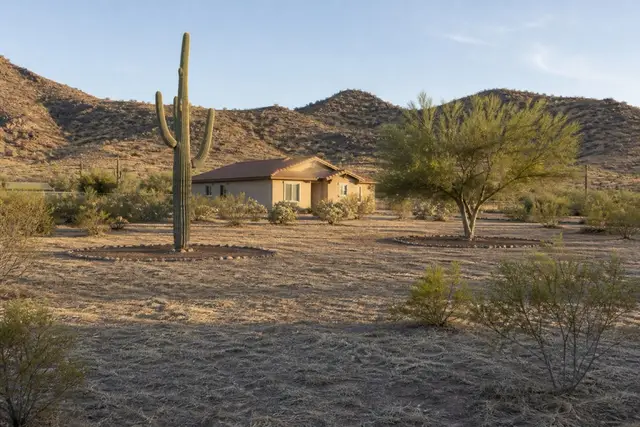
White Tank Clearing Pros puts Buckeye property owners on the phone with a local land clearing contractor when the job is defensible space & fire mitigation clearing — in Buckeye proper and the desert communities around it.
Desert fire runs on a conveyor belt of fine fuel. A wet winter grows a carpet of red brome and mustards between the shrubs; June cures it to kindling; and a spark — trailer chain, roadside cigarette, lightning — sends flame racing through grass that connects creosote to creosote all the way to your propane tank. Homes on Buckeye's desert edges, from the White Tank foothills to the acreage north of town, sit on that belt. Defensible space is how you cut it.
The work follows the zone logic fire agencies converged on years ago. Immediately around structures, the standard is stingy: nothing ignitable against the walls, no brush under windows, wood piles moved off the patio. Out to thirty feet, fuels get thinned and separated — annual grass mowed to stubble, shrubs islanded rather than continuous, dead wood removed entirely. Beyond that, on larger parcels, the treatment relaxes to thinning that keeps a ground fire from building momentum before it arrives.
What makes the Sonoran version distinctive is what stays. Defensible space here is not a bulldozed ring — a healthy saguaro holds almost no fine fuel and remains, protected and untouched, along with green paloverde and ironwood that get limbed up and cleaned rather than removed. The enemy is cured annuals, dead brush, packrat middens against structures, and invasive buffelgrass, which burns hotter than anything native and gets grubbed out on sight.
Timing is spring: after the winter annuals have grown but before they've fully cured and before the first dry-lightning cells arrive. A maintenance mow in later years costs a fraction of the first treatment — fuel management is a subscription, not a purchase, and the renewal price is low.
The zone map, translated for a desert lot
The national standard — refined over decades of post-fire forensics and summarized well in the Firewise USA program — concentrates effort where embers and flame contact actually ignite homes: the first five feet is kept essentially fuel-free, the thirty-foot band thinned and separated, and the extended zone managed for reduced intensity. The NFPA's wildfire research keeps finding the same thing: houses are lost to embers landing in ignitable material at the structure, far more than to walls of flame.
On a Buckeye lot the translation is concrete: gravel or bare mineral soil against the stucco, no oleander hedge under the eaves, mesquite limbed so canopy doesn't overhang the roof, and the annual-grass carpet mowed before June. None of it requires making the parcel ugly — the best defensible space out here reads as a clean desert yard, which is exactly what appraisers and insurers increasingly want to see.
Grass years and the buffelgrass problem
Fire risk in the Sonoran Desert isn't constant — it's rain-driven. A wet winter can multiply the fine-fuel load between the shrubs many times over, which is why the dangerous summers follow the pleasant springs. Watching the seasonal outlooks from the Phoenix NWS office tells you what kind of fuel year you're in; after a green February, book the mowing early because everyone on the desert edge needs it the same six weeks.
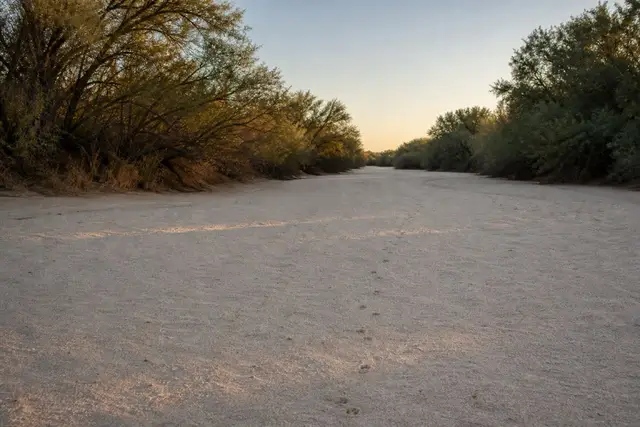
The wildcard is buffelgrass, an imported forage grass now naturalizing along Arizona roadsides and washes. It carries fire hotter and more continuously than native vegetation ever did, and it resprouts after burning — a fire cycle this desert didn't evolve with. On private parcels the response is straightforward: grub it out while patches are small, and treat any fence-line or wash colony as a priority rather than a curiosity. Your future self, watching a July grass fire from across the road, will approve of the diligence.