 White Tank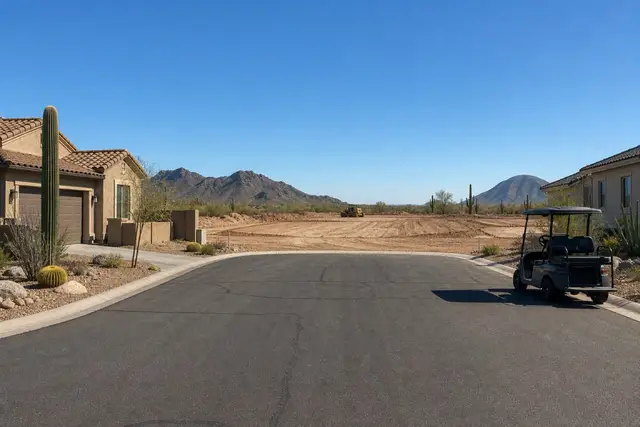
White Tank Clearing Pros puts Sun City Festival property owners on the phone with a local land clearing contractor for mulching, brush removal, and pad prep anywhere in the Sun City Festival area.
Sun City Festival is Buckeye's flagship active-adult community — a Del Webb development in the city's far northwest where golf carts share the streets, the landscaping standard is high, and the community is still building new phases into the surrounding desert. Clearing work here splits between that growing edge and the manicured interior, and both demand a contractor who understands the audience.
Edge work looks like the rest of new Buckeye: phase pads cleared and leveled, perimeter parcels mulched, dust controlled meticulously — because here the downwind neighbors are settled residents with strong opinions and an active HOA, not empty desert. Interior work is finer-grained: a problem tree out of a courtyard, stumps ground where an ornamental failed, storm cleanup after an outflow wind finds the eucalyptus, drainage regrades where a decade of settling has water wandering toward foundations.
Manners are part of the spec. Work windows respect quiet hours and event calendars, machines arrive clean and leave the streets cleaner, and every finish is show-ready — raked, hauled, and photographed. Residents here chose a community that looks a certain way; clearing work that respects that is what earns the next referral up the street.
Working the seam between fairways and raw desert
A still-growing community carries a moving boundary: this year's perimeter homes overlook next year's construction ground. Managing that seam well means the same dust seriousness as any Maricopa County earthwork — the county air-quality department's rules don't soften for master-planned settings, and neither do residents' windows — plus mulched, stabilized finishes on any parcel that will sit before building. The reward for restraint is a perimeter that reads as future neighborhood rather than staging yard.
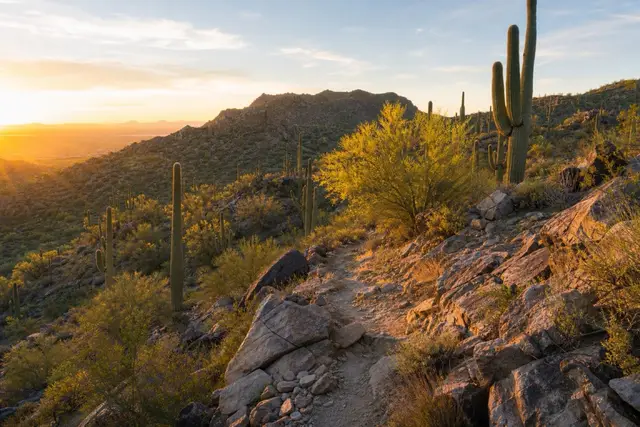
The desert being annexed by each phase carries its usual residents: saguaros and ironwoods that predate every plat map. The community's own design ethos leans on preserved and salvaged natives, and the state plant law's salvage pathway is how a cactus in a future cul-de-sac becomes a cactus in a front-yard landscape instead of a casualty.
The interior jobs an active-adult community generates
Two decades of maturing landscapes produce a steady docket: ornamental trees that outgrew their courtyards, roots lifting pavers, and the storm damage that follows any monsoon outflow through a community with thousands of irrigated trees — the NWS's downburst material describes the mechanism that fills cul-de-sacs with limbs in twenty minutes. Compact equipment handles all of it without disturbing the neighbors' morning: gate-width machines, quiet scheduling, same-day haul-off.
Drainage tune-ups are the sleeper service. Original grades settle, gravel migrates, and suddenly a patio drains toward the slab it was built to protect. Small regrade-and-fill jobs — a few yards of material, compacted properly, surfaces restored — fix in a morning what erosion spent a decade arranging, and they're among the most-requested work in communities of this vintage. The Extension's desert-yard guidance covers the planting side of the recovery.