 White Tank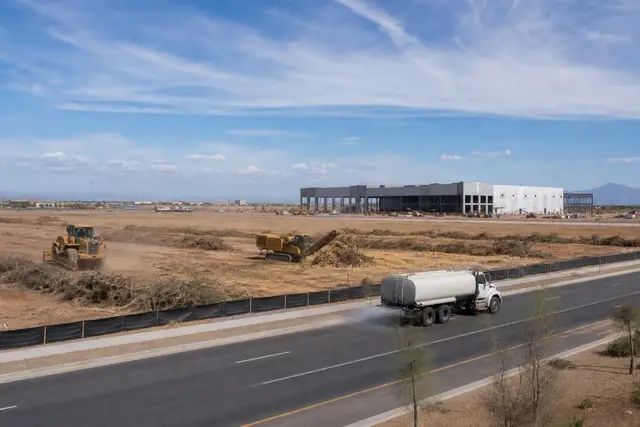
White Tank Clearing Pros puts Buckeye property owners on the phone with a local land clearing contractor when the job is commercial site clearing — in Buckeye proper and the desert communities around it.
Buckeye's arterials tell the story: distribution shells rising along the I-10 corridor, retail pads at the new intersections, school sites and phase openings pushing into ground that was creosote flat at the last aerial update. Commercial clearing is the trade that starts every one of those projects — vegetation off, root zones grubbed, surfaces stabilized — delivered inside the permit framework and construction schedule that commercial work runs on.
What distinguishes commercial clearing is the wrapper, not the brush. The county dust-control permit is table stakes at this scale, with water trucks, track-out control, and record-keeping operating from the first disturbance. Stormwater rules add their own layer on larger disturbances, with perimeter controls in before clearing starts. Utility locates, phased sequencing so following trades start on schedule, and documentation the GC's compliance officer can file — the operator this site routes commercial inquiries to treats all of it as the job, because it is.
Production planning does the rest. Multi-acre clearing wants the right iron in the right order: mulchers or brush rakes on the vegetation, excavators grubbing root crowns from building and paving footprints, loaders building and turning windrows, trucks cycling on a haul plan that doesn't block the phase. On Buckeye's flats the constraint is rarely terrain — it's dust windows, inspection timing, and keeping the cleared surface stabilized behind the machines as the work advances.
Native-plant compliance scales up with the acreage: commercial parcels get a protected-plant survey early, because a saguaro discovered by the clearing foreman is a schedule problem, while one identified in due diligence is a salvage line item. Buckeye's development pipeline has made plant-salvage contractors routine partners on commercial ground, and bids reflect that reality rather than fighting it.
The compliance stack at commercial scale
Three regulatory layers meet on every large Buckeye clearing. Maricopa County's dust rules govern the air side — permits and control plans through the county's application portal, with inspectors active across the West Valley's construction corridors. Stormwater rules govern the water side once disturbance is large enough, putting silt fence and stabilized entrances ahead of the first pass. And the state's native-plant framework governs what's growing on the parcel, with notice-and-salvage requirements that belong in the project schedule weeks before mobilization.
None of this is exotic to contractors who work the corridor — it's checklist material. The practical advice for owners and GCs is simply to buy it as part of the clearing scope: a bid that itemizes permits, water, perimeter control, and plant survey is comparable and enforceable; a bid that's silent on them is cheaper right up until the stop-work order.
Sequencing clearing so the schedule holds
Clearing sits at the head of the critical path, which means its risks cascade. The ones that actually bite in Buckeye: dust-event days when high winds park the machines — the Phoenix NWS high-wind and blowing-dust products are the planning feed — monsoon cells that turn a cleared, unstabilized surface into a compliance problem, and underground surprises where old agricultural infrastructure crosses the parcel. Buckeye was farm country before it was a growth corridor; abandoned pipe and buried concrete show up on 'raw desert' sites regularly.
The mitigation is sequencing: clear and stabilize in phases matched to the follower trades rather than stripping the full parcel on day one, keep water capacity matched to open acreage, and grub only the footprints that need it while mulch cover holds the rest. A phased site generates less dust, less rework after storms, and a cleaner inspection record — the air-quality department's own guidance pushes the same logic, because open disturbed acreage is the whole ballgame in PM10 country.