 White Tank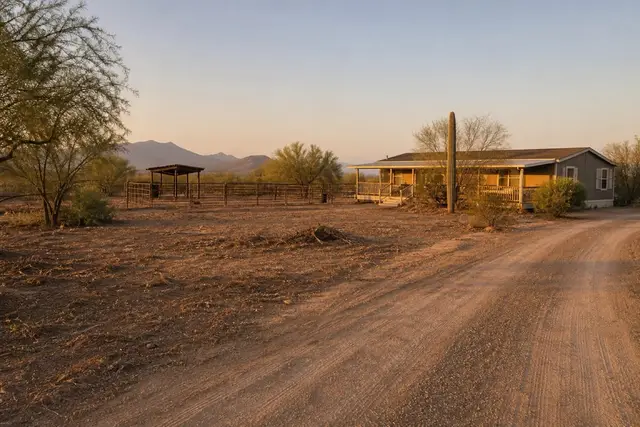
White Tank Clearing Pros puts Wittmann property owners on the phone with a local land clearing contractor for mulching, brush removal, and pad prep anywhere in the Wittmann area.
Wittmann is what the far West Valley looked like before the master plans — an unincorporated stretch of horse ranchettes and small acreage along US 60, counted at 684 residents in the 2020 census and stubbornly rural since. The ground is Hassayampa floodplain: deep sandy soils that grow the metro's best mesquite thickets, drain a storm in an hour, and swallow an unmaintained parcel in bosque regrowth faster than anywhere else this site covers.
Horse-property needs drive the work. Arena and turnout ground wants mesquite cleared crown-and-all — a resprouting stub in a turnout is a vet bill waiting to happen — with the surface disked smooth and every thorn scrap raked and hauled. Corrals and pens reclaimed from thicket get the same treatment plus fence exposure, since Wittmann's pipe-rail and wire lines disappear into brush in a few unmowed seasons. And the long private lanes off Patton and Grand deserve corridor clearing so trailers pass without pinstriping.
The floodplain adds its own agenda: washes braid across parcels here, salt cedar colonizes the damp reaches, and storm flow off the Hassayampa system periodically redecorates. Clearing that respects the flow paths — crossings opened, tamarisk grubbed root-first, banks left armored by native mesquite — keeps a Wittmann parcel usable through monsoon season instead of downstream of it.
Mesquite ground: blessing, thicket, and firewood
The same deep sandy moisture that makes Wittmann prime horse ground makes it prime velvet-mesquite ground, and every parcel negotiates that trade. The management picture is selective: keep the shade trees that make July bearable for stock, clear the thicket regrowth that eats turnout space, and grub what you clear so it stays cleared — mesquite crowns left in sandy soil resprout with irrigation-district enthusiasm. State plant rules ride along even out here; the UA Extension's native-plant-law overview covers which trees carry notice requirements before they come out.
The consolation prize is the wood: cleared mesquite bucks into some of the best firewood in Arizona, and plenty of Wittmann jobs end with a neat rick beside the hay shelter instead of a disposal fee. Brush and thorn scrap still gets chipped or hauled — never left where hooves go — and nothing burns on site without the fire-authority formalities nobody wants to babysit in June.
Sandy washes, open range, and keeping the parcel honest
Wittmann's washes look gentle and move serious water when a cell sits over the Vulture foothills upstream — the NWS flash-flood guidance is written for exactly these crossings. Parcel work here keeps the braids open: crossings armored where lanes cross them, salt cedar grubbed out of the damp reaches before it walls them off — the federal saltcedar profile explains why halfway measures fail — and debris hauled uphill of the flow line, not stacked in it.
Fencing carries legal weight in this unincorporated country, where open-range rules put the practical burden of keeping cattle out on the landowner. A cleared, inspectable fence corridor is the enforcement mechanism; the Extension's rural-property resources cover the rest of the ranchette checklist that clearing supports — wells protected, lanes passable, weeds mowed before seed set.