 White Tank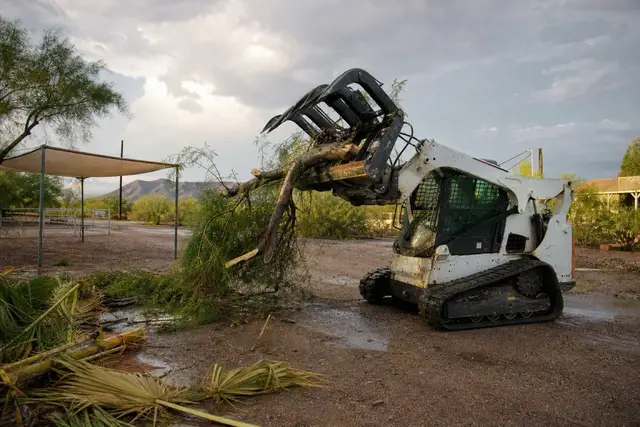
White Tank Clearing Pros puts Buckeye property owners on the phone with a local land clearing contractor when the job is storm debris cleanup — in Buckeye proper and the desert communities around it.
Buckeye's storms are brief and specific. A monsoon cell builds over the White Tanks, drops a microburst on two square miles, and is gone in forty minutes — leaving one neighborhood untouched and the next one with aleppo limbs across driveways, an athel tree folded onto the corral fence, and a wash-load of debris shoved against the culvert. Storm cleanup is triage work: make it safe, make it passable, then make it tidy.
Safe comes first because storm-damaged trees cheat. A snapped limb hung in a canopy — the industry calls them widow-makers for cause — lets go without notice; a leaning eucalyptus holds tension a chainsaw releases all at once; a root-sprung tree half-tipped by saturated ground finishes the fall when the weight shifts. This is grapple-and-rigging work, done by people who take the loaded piece down on purpose rather than being surprised by it.
Passable is the next hour's problem: the driveway, the gate, the road frontage, the irrigation ditch that feeds your stock tank. A skid-steer with a grapple clears a blocked drive in less time than the insurance phone call takes, and photographs everything on the way for exactly that phone call.
Tidy is the part that keeps the cleanup from being annual. The same visit that hauls the debris can remove the tree species that keep failing — shallow-watered ornamentals and brittle non-natives dominate Buckeye's storm-damage roster — and thin the survivors so the next outflow wind finds less sail. Storm work always seems urgent and chaotic; a written scope keeps it neither.
Why the same trees fail in every monsoon
Walk any Buckeye neighborhood the morning after an outflow event and the casualty list repeats: aleppo pine limbs, eucalyptus, athel, mulberry — fast-growing imports watered shallow by drip systems, carrying dense canopy on wood that never load-tested against a 60-mph gust front. The National Weather Service's thunderstorm-safety material explains the mechanism — downburst winds arriving horizontally with almost no warning — and the desert natives largely shrug it off while the imports shed tonnage.
The fix isn't removing every non-native; it's honest triage. Trees with included bark, over-extended limbs, or repeated failure history come out or get reduced before the next season. The UA Cooperative Extension's desert horticulture guidance is blunt about deep, infrequent watering as the difference between anchored trees and tip-overs — half the storm damage in this valley is an irrigation-schedule problem wearing a weather costume.
After the wind: water, washes, and the second mess
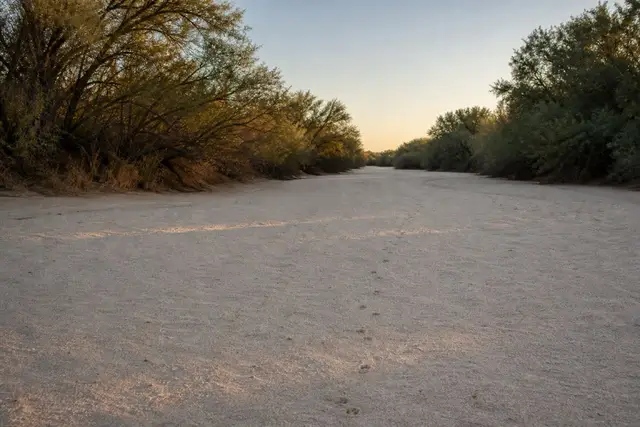
Monsoon cells deliver two disasters in one: the wind mess you can see and the water mess that shows up at the culvert. Storm flow picks up every loose branch and tumbleweed for a mile and deposits the bale wherever your driveway crosses the wash — and a blocked crossing sends the next storm's water somewhere new, usually somewhere expensive. Cleanup that stops at the visible yard debris leaves that bill pending; the Phoenix forecast office's flash-flood messaging exists because the second storm of a burst pattern often lands within days.
A complete pass therefore walks the drainage: crossings cleared, culverts opened, debris hauled uphill of the flow line rather than stacked beside it. If the storm exposed grade problems — water standing against the slab, a rill cutting toward the septic field — that's worth fixing while the machine is already on site; an hour of blade time after a storm often prevents the whole next cleanup.