 White Tank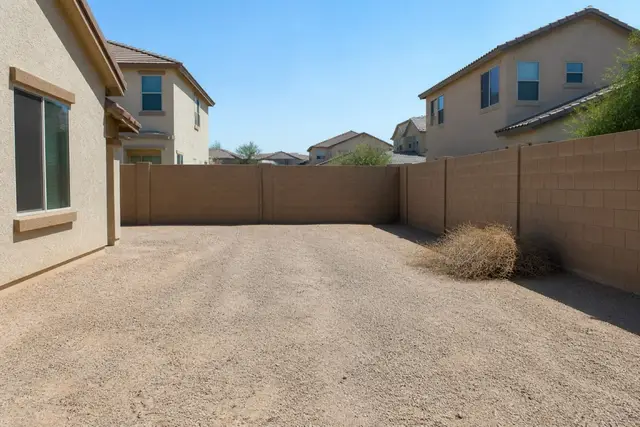

White Tank Clearing Pros puts Westpark property owners on the phone with a local land clearing contractor for mulching, brush removal, and pad prep anywhere in the Westpark area.
Westpark came up in Buckeye's mid-2000s wave near the Watson Road corridor — close to the schools, the ballpark, and the I-10 interchange that made this side of town commute-practical. Its landscapes are now old enough to have winners and losers: the mesquites that were watered right are handsome shade trees, and the ones that weren't are storm hazards; the oleander hedges are either walls of green or half-dead fire fuel; and a share of the housing stock has cycled through renters whose landlords deferred everything.
That makes Westpark the neighborhood-reclamation capital of this site's coverage. The signature job: a backyard gone feral — dead hedge row, waist-high tumbleweed against the block wall, a volunteer mesquite thicket where the lawn was — cleared, grubbed, stumps ground, and hauled in a single visit, leaving ground a new owner or a returning landlord can actually use. Compact equipment through the side gate, dust watered, done in a day or two.
Front-of-house work rides the same visits: failed ornamentals out before they fall on something, roots chased away from slabs and pool decks, and the odd original-desert holdout lot on the neighborhood's edges cleared for the infill builders now working every established Buckeye block.
Rental turnovers and the economics of one clean visit
Landlords and flippers run Westpark's reclamation math constantly: a yard that photographs as a liability suppresses rent and resale far beyond the cost of fixing it. The efficient version is one mobilization that does everything — clear, grub, grind, haul, rake — rather than a gardener's slow war of attrition. Disposal is half the job on these lots; nothing burns inside city limits, oleander never gets chipped for mulch given its toxicity, and a full turnover load usually means a trailer to the transfer station, itemized on the bid rather than smuggled into an hourly rate.
The replant decision benefits from ten minutes of reading: the UA Extension's low-water landscape guidance is the difference between a yard that looks good in year five and the cycle starting over. Right tree, right place, deep water — the failures being hauled out of Westpark yards were mostly planted against all three rules.
Mid-life trees: keep, fix, or clear
Twenty-year-old trees planted on builder irrigation schedules fail in predictable ways: shallow root plates that tip in outflow winds, included-bark unions that split under monsoon loading, roots prospecting under slabs for the moisture drip lines never delivered deep. The NWS wind-safety pages describe the gust-front loading; any August drive through a neighborhood this age shows the results. Triage is straightforward — structural failures and chronic offenders clear out, sound trees get their watering corrected — and it's cheapest done deliberately rather than after the insurance claim.
Root damage deserves its own line: a mesquite lifting a pool deck doesn't stop on request. Removal with the stump ground below grade, followed by cutting the prospecting roots back at the hardscape line, ends the problem; the county's dust rules even reach jobs this size when enough yard gets opened up, which a good bid simply handles.